 June 4, 2026
Bringing Life Back to the Soil in Equatorial Guinea
In Equatorial Guinea, the only Spanish-speaking country in Africa, a quiet but profound transformation is taking root. Even though the nation officially relocated its capital from Malabo (located on Bioko Island) to the mainland rainforest city of Ciudad de la Paz in early 2026, a dedicated group of pastors has chosen to remain with the desire to transform the lives of others in their communities. Yet these spiritual leaders face a harsh physical reality: many struggle to eat even one plate of food in a day.
Despite existing in a lush tropical climate, Equatorial Guinea’s agricultural sector accounts for only about 2% of the country's Gross Domestic Product (GDP). Domestic output meets only 20% to 30% of local consumption, leaving the nation heavily dependent on expensive imported food. For the pastors relying on minimal, scattered subsistence farming, the problem isn't a lack of land—it is a lack of knowledge on how to cultivate it efficiently.
Traditional methods have only compounded the struggle. Local agriculture relies heavily on slash-and-burn farming and shifting cultivation. Because of the relentless equatorial rains, land that is continuously cleared quickly loses its nutrients, forcing farmers to abandon depleted plots and move to new ones. Furthermore, a lack of irrigation leaves farmers entirely dependent on natural rainfall, while poor drainage causes waterlogging that can rot staple root crops such as cassava and sweet potatoes.
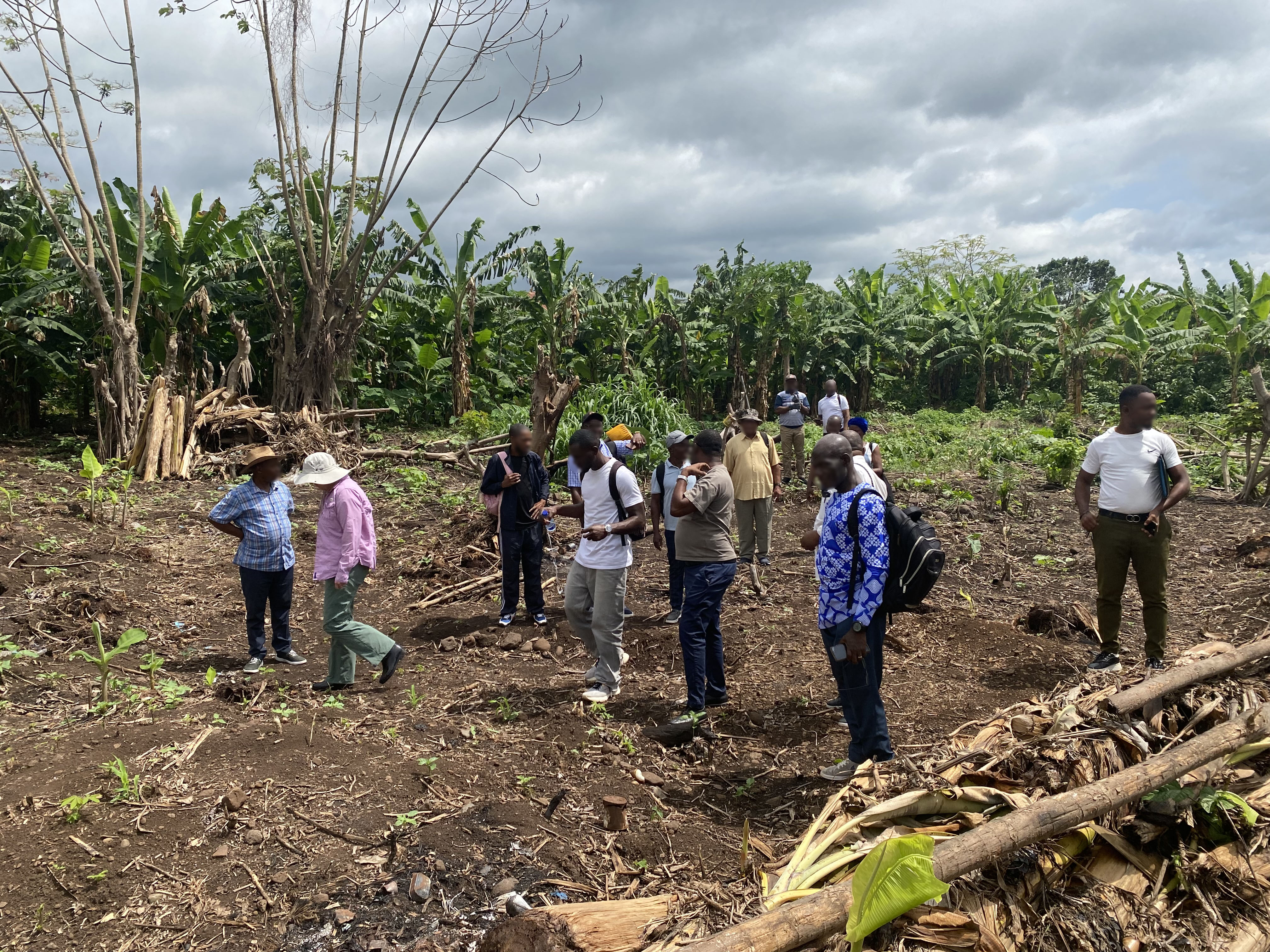
Through a Global Alliance for Church Multiplication connection in Zimbabwe Equipping Farmers International (EFI) was brought to Malabo to collaborate with the National Alliance of Equatorial Guinea for Christ (ANAGEC). Together, they hosted an intensive 5-day agricultural training for 20 invited pastors. The desire for this knowledge was so overwhelming that there are many more pastors waiting for a future opportunity, which may also include animal husbandry.
What made this training unique is the foundational theology that is taught alongside the farming techniques. EFI taught the pastors to look at farming as an act of worship. Using the Parables of the Talents and Stewardship, the training emphasized that God gave humanity the responsibility to care for the earth. While humanity’s relationship with the land was broken during the Fall of Man, practicing agricultural conservation is a beautiful act of restoration and biblical stewardship.
Armed with this renewed mindset, the pastors learned practical techniques to move beyond mere survival. They were trained to efficiently cultivate yucca, cassava, lettuce, cabbage, rice, and onions. They learned crucial skills to protect their harvests and reduce spoilage, such as exactly when to cut onion leaves for optimal storage. The training introduced a powerful new yield metric to strive for: "6 for 6"—empowering a farmer to grow enough to feed a family of six for six straight weeks.
This 5-day gathering was just the beginning. The vision is for these 20 pastors to take this agricultural training back to their congregations and multiply the knowledge among their church members. The pastors are now working collaboratively to acquire a larger plot of land for ongoing training, with plans to gather again next year to add animal husbandry to their skill sets.
Through the partnership of ANAGEC and EFI, these pastors are no longer just surviving. They are learning to generate sustainable food and financial income through their crop yields, transforming their land, their livelihoods, and their communities for the glory of God.
“But he replied to him, ‘Sir, leave it this year also, until I dig around it and fertilize it. Perhaps it will produce fruit next year, but if not, you can cut it down.’”
(Luke 13:6-9 CSB)
Restoration is not something we achieve solely on our own; it is an act of divine cultivation. Just as the gardener digs around the roots and adds fertilizer, Jesus works in our lives through trials (digging) and the nourishment of the Holy Spirit (fertilizing) to break through our hardened hearts.

